Profit vs. Cash Flow: Why a Profitable Business Can Still Run Out of Money
5 min read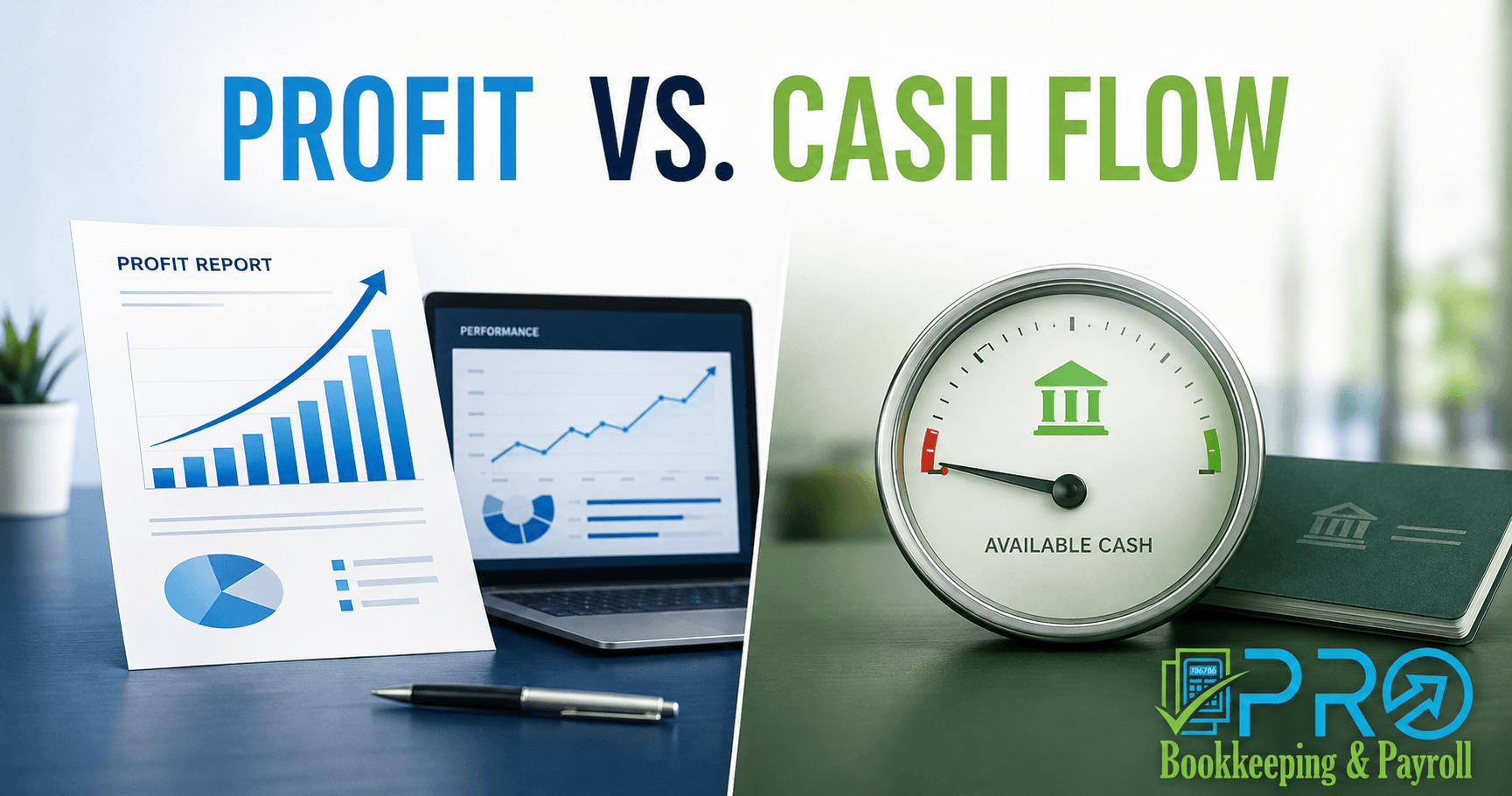
Profit Does Not Always Mean Cash in the Bank
Your profit and loss statement shows a healthy profit. Sales are increasing, expenses appear under control, and the business seems to be doing well. Then payroll is due, a large vendor payment clears, or a tax bill arrives, and suddenly there is not enough money in the bank.
How can a profitable business run short of cash?
The answer is simple: profit and cash flow measure two different things. Both are important, but neither gives you the complete financial picture by itself.
What Is Profit?
Profit is the amount left after subtracting business expenses from revenue during a specific period.
Revenue - Expenses = Profit
Your profit and loss statement helps answer questions such as:
Is the business earning more than it spends?
Are sales improving?
Are operating costs increasing?
Which areas are helping or hurting profitability?
A profitable business generally has a solid foundation. However, reported profit does not necessarily mean the same amount of cash is available in the bank.
What Is Cash Flow?
Cash flow tracks the actual movement of money into and out of your business. It shows whether your available cash increased or decreased during a given period.
Cash comes in from customer payments, loans, owner contributions, and asset sales. Cash goes out for payroll, rent, inventory, equipment, taxes, debt payments, vendor bills, and owner withdrawals.
Positive cash flow means more cash came in than went out. Negative cash flow means the business spent more cash than it received. A company can be profitable while experiencing negative cash flow, especially during periods of growth or when customer payments are delayed.
Why Profit and Cash Can Be Different
Several common business activities affect cash differently from profit.
1. Customers Have Not Paid Their Invoices
Under accrual accounting, revenue may appear on the profit and loss statement when it is earned, even if the customer has not paid yet. That sale can increase profit while the cash remains tied up in accounts receivable.
For example, you may complete $20,000 of work in June and record the revenue in June. If the customer pays in August, the June profit and loss statement may look strong even though the money is not yet available to cover June expenses.
Businesses using cash-basis accounting generally record the revenue when payment is received, so this timing difference is handled differently. Either way, slow collections can create real pressure on the bank account.
2. You Purchased Inventory
Buying inventory requires cash, but the full purchase may not immediately appear as an expense on the profit and loss statement. Unsold inventory is generally recorded as an asset until it is sold.
This means a growing business may invest heavily in products, show a profit, and still have much of its cash sitting on shelves.
3. You Made Loan Payments
Loan payments usually include principal and interest. Interest is generally recorded as an expense, but the principal portion reduces the loan balance on the balance sheet instead of reducing profit.
The full payment leaves your bank account, while only the interest portion generally appears as an expense on the profit and loss statement. This can make cash decline faster than profit.
4. You Bought Equipment or Other Major Assets
When you purchase a vehicle, computer system, furniture, or machinery, cash may leave the bank immediately. However, the cost is often recorded as an asset and expensed gradually through depreciation instead of being fully recognized on the profit and loss statement at once.
The business may still report a profit even after making a large cash purchase.
5. The Owner Withdrew Money
Owner draws and many distributions are not business expenses. They reduce cash and equity but usually do not reduce net profit on the profit and loss statement.
If withdrawals are not planned carefully, a profitable business can lose the cash it needs for upcoming obligations.
6. Taxes and Other Large Payments Are Due
Sales tax, payroll tax, estimated income tax payments, annual insurance premiums, and other periodic bills can create major cash demands. Some of this money may already be committed even though it is still sitting in the business bank account.
Without a cash forecast or separate reserves, these payments can feel unexpected.
A Simple Example
Assume a business reports a $15,000 monthly profit. During the same month, it also:
Waits to collect $12,000 from customers
Pays $5,000 toward loan principal
Purchases $6,000 of equipment
Distributes $3,000 to the owner
These transactions do not all reduce reported profit in the same way they reduce available cash. The business can show a $15,000 profit and still end the month with less cash than it started with.
That does not necessarily mean the profit and loss statement is wrong. It means the owner needs to review more than one financial report.
Reports Every Business Owner Should Review
To understand the full financial condition of your business, review these three core reports together:
Profit and Loss Statement: Shows revenue, expenses, and profit over a period of time.
Balance Sheet: Shows what the business owns, what it owes, and its equity at a specific date.
Statement of Cash Flows: Explains how operating, investing, and financing activities changed your cash balance.
Also review accounts receivable aging, accounts payable aging, loan balances, and upcoming tax obligations. Together, these reports help explain why profit may be increasing while cash is decreasing.
How to Improve Cash Flow
Cash flow problems are easier to manage when you identify them early. Consider these practical steps:
Send invoices promptly and follow up on overdue balances.
Request deposits or progress payments for larger projects.
Review accounts receivable every week.
Set clear payment terms and make payments convenient for customers.
Plan inventory purchases based on sales patterns.
Build reserves for payroll, taxes, debt payments, and seasonal slow periods.
Review owner withdrawals before taking money out of the business.
Prepare a rolling cash flow forecast for the next 8 to 13 weeks.
Review financial reports monthly and investigate unusual changes.
Good Bookkeeping Connects Profit to Cash
Accurate bookkeeping does more than tell you whether the business made a profit. It helps you understand where your cash went, which customers still owe you, what bills are coming due, and whether the business can meet its obligations.
At Pro Bookkeeping & Payroll, we help business owners maintain accurate books, reconcile bank and credit card accounts, review financial reports, and gain a clearer understanding of both profitability and cash flow.
If your business looks profitable but the bank balance tells a different story, we can help you identify the reason and improve your financial visibility.
Schedule a discovery call at ProBookkeepingUSA.com or call 817-726-0786.
Disclaimer: This article is provided for general educational and informational purposes only and does not replace professional accounting, tax, legal, or financial advice. Consult a qualified professional regarding your specific situation.
Schedule a free consultation and we will review your bookkeeping needs and recommend the next step.